When encountering a giant coral colony and attempting to measure it, or even just approaching it, it is important to follow some guidelines to avoid damaging it intentionally or unintentionally. The Green-Fins Code of Conduct (Hunt et al. 2013) served as a key reference for these recommendations.
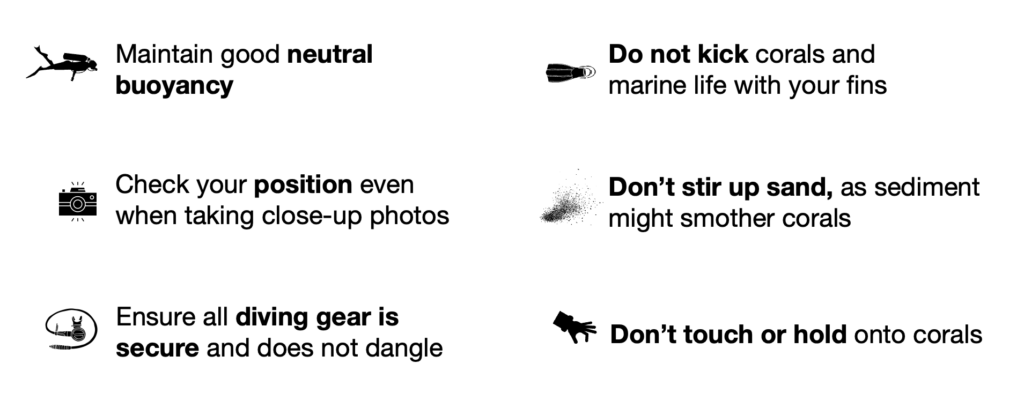
Maintaining neutral buoyancy ensures you don’t accidentally sink deeper and kick the coral. When you’re approaching giant corals, but also reefs in general, it is important to have the equipment secured close to you without any part dangling down: loose regulators or SPG may get entangled break corals and also put you at risk when trying to disentangle them. It is also common that photographers may be so focused on the best shot, that they don’t realise that they are moving across depths or are getting unintentionally closer to the bottom and other organisms.
Coral skeletons are sharp, and to protect themselves, coral polyps release mucus when they are touched. This is full of bacteria and can also cause infections if there’s an open wound. Touching them is really not recommended for both you and the corals!
Finally, stirring up sand may damage corals when this sits on the organisms which then have to work hard to remove it.
Please follow this best practices when you encounter a giant!
Published on: 23 April 2025